
Op-Ed
The Fairfield Osborne Preserve is a nature preserve, currently owned by Sonoma State University in collaboration with Federated Tribes of Graton Rancheria. Located on the Northwest flank of Sonoma Mountain, the land is a unique piece of biodiversity, filled with numerous types of trees, plant life and fauna. However, like all land here in the United States, its eventual acquisition into the hands of Sonoma State is a matter of theft
Before settlers came to this land, the preserve was the seasonal hunting and gathering site for the Pomo, Miwok, and Wappo. Some of these tribes have inhabited the region since 7000 BCE. However, from the early to mid 1800s, settlers made their way into what would be Northern California. Russians colonized from the west coast through places like Fort Ross, from the south and east, Spanish and European-American colonists came. Spanish missionaries stole and enslaved many people, while Russian and European-American settlers went in and moved into the land that once belonged to these tribes.
The land that is now the preserve was colonized by General Mariano Guadalupe Vallejo, the Californio general of Spanish descent who also founded Sonoma. It was first colonized around 1836 and used for agriculture, even as it changed hands and saw new owners. During one of my visits to the preserve, I saw one of the original barns, standing as a historical monument to the human involvement with this land.
So, how did stolen land end up as a nature preserve? In the 1950’s the land was sold to William M. Roth, an American shipping executive and a member of the executive committee of the American Civil Liberties Union (ACLU). In 1972, the land was donated to the Nature Conservancy in part due to William’s wife, Joan Roth.
Joan’s father, Henry Fairfield Osborne Jr., was an American conservationist. The land was preserved to honor him. Looking through old archival materials from the preserves days under the control of the Nature Conservancy, a quote from Osborne is seen plastered on many documents, indicative of the mission of the land and preservation of it:
“It is only by adjustment to the process of nature that man, like all other living creatures, can establish a friendly balance that will make life on this planet possible for generations not yet born.”
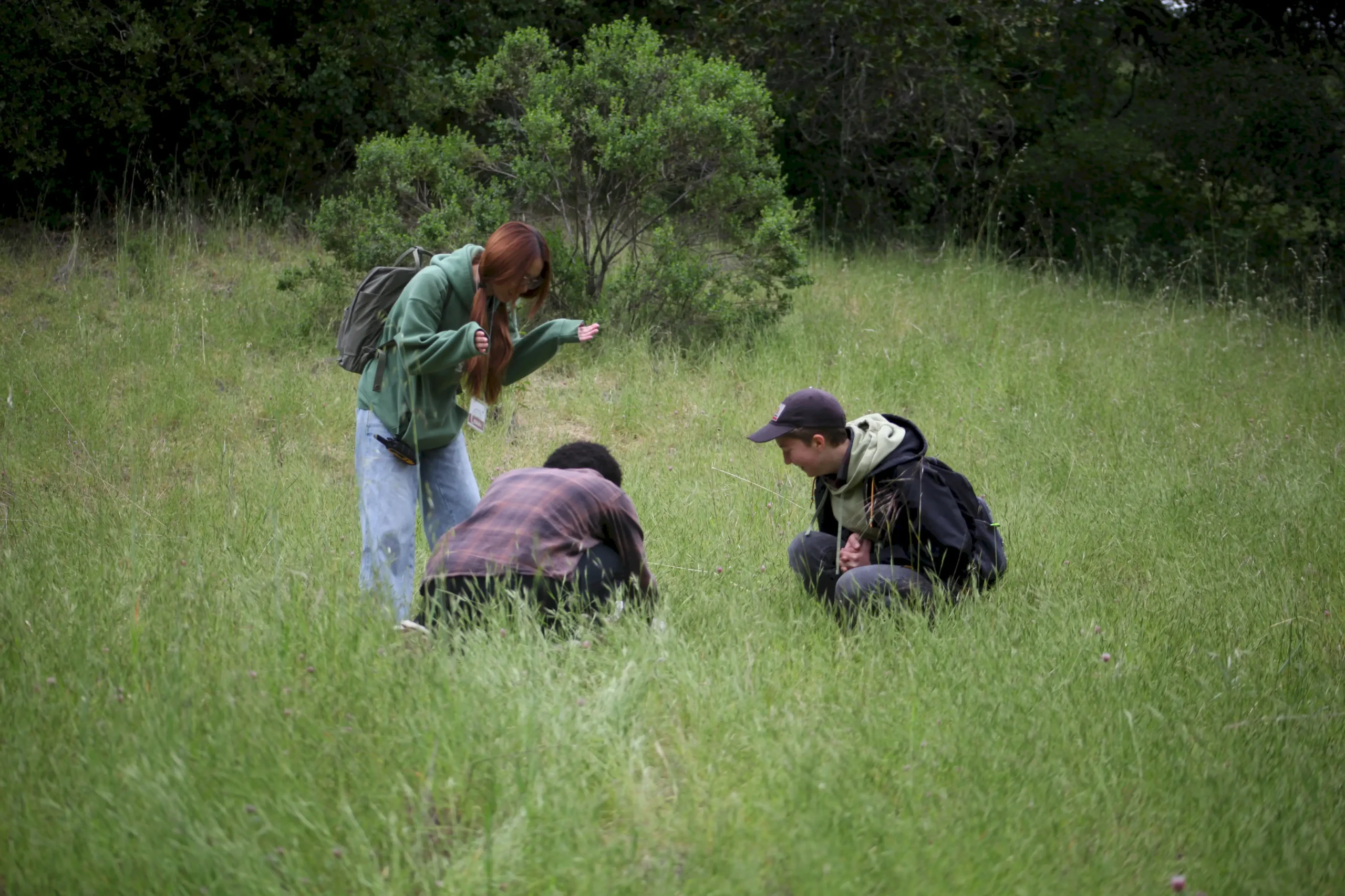
In 1977 the Nature Conservancy allowed the use of the land by the Sonoma State University Biology Department. The land allowed researchers and students to explore the preserved biodiversity of the land. This led to the creation of the Naturalist program, which offers educational tours about nature preservation and trains students and volunteers to study the local environment.
“Being a naturalist, a lot of it is getting the word out and spreading the word,” said Kade Dorstad, a naturalist and education assistant at the preserve.
“We are teaching youngest generations how to notice these issues, care about them, and address them, and a lot of these kids have never been to the outdoors like this before… we’re creating an interest in them, and we’re making sure that they end up caring about the ecosystem when they grow older, and we do mainly a lot of research, we do a lot of restoration, we do a lot of promotion and just education, but that, like our programs, like our community naturalist training, is the idea is to get people from all walks of life to to be a part of this.”
In 1976, the Roth family continued to help the preserve by donating more of the land they owned, bringing the preserve’s total to 450 acres. In 1997, the Nature Conservancy transferred their ownership of the preserve to Sonoma State.
Over the course of many decades, naturalists, researchers and guests have come and gone from the preserve. However, its mission, headed by Sonoma State’s Center for Environmental Inquiry (CEI) remains the same: “Education into Action.”
“I’m sure you’ve been on walks where it’s like, you know, you learn about this stuff, but what do you do with that information?” said Suzanne DeCoursey, education manager for CEI, “How do you actually bring that forward into your life? How do you take what you’re learning and turn it into something that you can meaningfully do to help address environmental challenges, because that’s really what our mission is about, in addition to getting people involved in hands-on activities, is also helping everyone address environmental challenges that can range from anything from art that helps change people’s minds about certain things to different research projects.”
“I personally am interested in helping to address what’s sometimes called nature deficit disorder. In the 90s, Richard Louv basically coined the term nature deficit disorder to point to the fact that some children weren’t getting a chance to come out here, have these experiences, and so therefore did not feel that the natural world had any relevance to their lives. Humans don’t seem to really be developmentally complete unless we’re able to come out into places like this, and also, and it has ramifications for the future of any type of environmental action, because if you don’t feel that these places are welcoming or or relevant, you’re not going to necessarily be interested in helping to address environmental challenges.”
Part of the transfer of ownership enabled Sonoma State to allow the Federated Tribes of Granton Rancheria, the descendants of the Coast Miwok and Southern Pomo people, to oversee the land and its use. This partnership has enabled CEI to maintain its ultimate goal while finally allowing the descendants of the original people who called these lands home a connection back to them. Part of the partnership has led to making the preserve more accessible for all.
“We’re standing basically in this is the physical manifestation of that relationship,” said DeCoursey, as we stood outside the learning center on the preserve. “All of this renovation wouldn’t have happened without the generosity of the tribe, and we are working on an interpretive plan with the tribe. So here’s the physical infrastructure, what signage, what interpretation and what other physical signs do we want, and how does the tribe want to continue to be associated and connected to this place.”
Accessibility to all is a running theme of the recent developments at the preserve. From handicap accessible walkways to off the grid resources, the preserve is built to allow anyone to be able to appreciate its unique biodiversity. Part of this effort is the recent implementation of bilingual Spanish speaking tours.
Claudia Kamiya Shikina, a 4th year biology major at Sonoma State, is the CEI’s first Bilingual Educator Assistant.
“We hope to follow our goal of being inclusive and bringing nature to as many people as possible,” said Shikina, “We try to always be interdisciplinary and reach as many people as we can, so that we can involve everyone in our community when it comes to conservation. I’m the first one in my position to start a job like this, to just be able to reach as many Spanish speakers in the community as possible, and make sure that we get their voices to be heard too, when it comes to the environment, and helping out and preserving just our surroundings.”
My interviews for this piece were all conducted as we hiked on the trails of the preserve, along with other naturalists and guests. The environment is a dense growth of trees and fauna. Cover boards can be seen off to the side of trails, pieces of plywood placed to encourage life to flourish underneath for the use of what is called Herping, the practice of searching for amphibians and reptiles.
As we flipped over one of these boards, Kade Dorstad found a ring-necked snake, carefully picking it up. The snake slithered between his fingers, occasionally sticking its tongue out. Dorstad and the other naturalists examined the creature with wonder.
As I walked the trails with the group, I could feel the sense of history and of all the time that has passed in those woods. Slight remnants of human activity remained, the barn, a rock wall, a watering hole and an old dock leading out into what is known as “Turtle Pond,” a man made pond on the preserve.
There was a sense of tension in how the land had to be precariously taken care of amid its history. I tried to imagine what the land must have been like in 7000 BCE. Will nature ever reclaim its former glory? Have the scales been tipped too heavily by the resources we rip and tear from this planet?
For now, the preserve serves as a lesson for future generations.